Why This Eerie Stone Forest in Madagascar Belongs on Your Bucket List
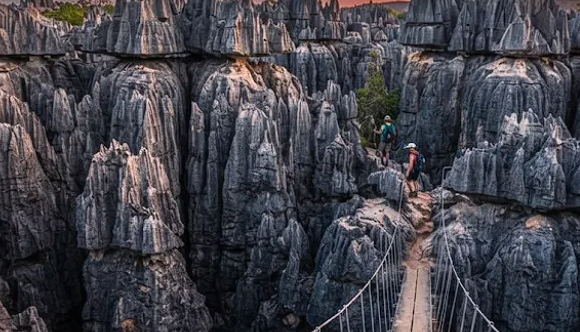
Imagine standing on the edge of a forest that makes no sound in the wind. Instead of swaying leaves, an endless ocean of razor-edged grey blades thrusts skyward out of the earth—towering limestone needles rising 50 to 100 meters high like the shattered spires of a sunken Gothic cathedral. Between their narrow shadows plunge pitch-black canyons, secret caves, and suspended rope bridges hanging over sheer vertical drops.
Welcome to Tsingy de Bemaraha in western Madagascar—one of the strangest, most hauntingly beautiful landscapes left on Earth.
Far off the beaten tourist trail and guarded by grueling red-dirt tracks and wide river crossings, this UNESCO World Heritage wonder doesn’t give itself up easily. Yet for travelers willing to make the journey, walking above—and deep inside—this eerie stone forest delivers an adrenaline rush and a sense of raw discovery few places on the planet can match.
1. A Prehistoric Labyrinth Built Where “No One Can Walk Barefoot”
Even the name sounds like a warning. Derived from the Malagasy word mitsingitsingy, “Tsingy” roughly translates to “walking on tiptoes” or “where one cannot walk barefoot”. One glance at the jagged terrain explains why: the weathered limestone blades are sharp enough to slice straight through bare skin and shred the soles off cheap hiking boots.
How did nature create something that looks so fiercely engineered? Roughly 200 million years ago during the Middle Jurassic era, this entire corner of western Madagascar lay beneath a warm, shallow sea rich in marine sediments and fossil corals. Over eons, tectonic shifts pushed that ancient seabed upward into a massive limestone plateau. Then came the true sculptor: water. Through a slow geological process called karstification, slightly acidic tropical rainwater seeped down through vertical fractures, dissolving the rock from both above and below until flat stone collapsed into underground caves, sinkholes, and needle-sharp ridges.
Spanning more than 150,000 hectares across a strict northern reserve and a southern national park, Tsingy de Bemaraha was inscribed as a UNESCO World Heritage Site in 1990—and in 2023 became the centerpiece of UNESCO’s expanded Andrefana Dry Forests heritage site.
2. Cliffside Tombs and Echoes of Madagascar’s Ancestors
What elevates Tsingy de Bemaraha from a mere geological oddity to something genuinely eerie is its human mystery.
Where the Manambolo River slices through the plateau in a dramatic 100-meter-deep canyon, local boatmen pole traditional wooden pirogues (dugout canoes) past towering sheer cliffs. Look high up into seemingly unreachable cavities and rock ledges along the gorge wall, and you will spot ancient burial caves belonging to the Vazimba—revered in Malagasy tradition as the island’s earliest inhabitants. How and why these tombs were placed so high above the dark water adds an unforgettable chill to the stillness of the canyon.
3. A Fortress of Blades Protecting a Hidden Eden
From above, the grey expanse of needles looks completely lifeless—like an alien wasteland of fractured steel. Look closer, however, and you realize those deadly stone blades act as a natural medieval fortress.
Because grazing cattle, slash-and-burn farming, and bushmeat hunters cannot cross the razor-sharp limestone maze, the collapsed sinkholes and cool shadowed canyons wedged between the pinnacles have become untouched micro-Edens. Around 85% of the species recorded here are endemic, and wildlife thrives in distinct vertical layers—from subterranean bat caves at the bottom to sunlit rock tips overhead:
- Decken’s Sifaka (Propithecus deckenii): These ghostly, snow-white lemurs with charcoal-black faces perform heart-stopping acrobatics, bounding effortlessly from one knife-sharp stone needle to the next without getting a scratch.
- Cleese’s Woolly Lemur (Avahi cleesei): Also called the Bemaraha woolly lemur, this rare nocturnal primate lives nowhere else on Earth—and happens to be the only primate named after Monty Python star John Cleese in honor of his lemur conservation work.
- Strange Cave & Canyon Dwellers: Alongside 11 to 13 lemur species and Madagascar’s top predator (the fossa), the park shelters 15 species of cave bats, over 90–100 bird species (including the endangered Madagascar fish eagle and the Tsingy wood rail), Henkel’s leaf-tailed geckos, and the bizarre, dragon-like armored leaf chameleon (Brookesia perarmata).
4. Hiking the Tsingy Is Part Trek, Part Indiana Jones
Unlike most wildlife parks where you sit passively inside a safari vehicle, exploring Tsingy de Bemaraha is gloriously hands-on:
Grand Tsingy (The Ultimate Thrill)
Circuits like Andamozavaky and Ranotsara are the bucket-list centerpiece—typically a 4-to-6-hour expedition covering roughly 5.6 km of pure vertical adventure. You start on a shaded forest floor, squeeze single-file through pitch-black underground caverns, pull on a climbing harness and clip into fixed steel via ferrata cables, scale near-vertical metal ladders bolted straight into cliff faces, and finally emerge onto the roof of the stone forest. The climax? Stepping out onto swaying suspension bridges strung between towering rock pinnacles with dizzying chasms yawning far below.
Petit Tsingy (Labyrinths & Lemurs)
More compact (usually 2 to 4 hours) with shorter 10-to-15-meter spires, Petit Tsingy winds through tight stone crevices, shaded forest trails teeming with sifakas, and quieter panoramic viewpoints. It’s fantastic on its own—or as a gentler warm-up day before tackling the Grand Tsingy.
Manambolo River Gorge by Pirogue
For a total change of pace, glide silently down the Manambolo River in a dugout canoe, drifting beneath 100-meter limestone walls to explore stalactite caves, spot basking Nile crocodiles, and gaze up at the cliffside Vazimba tombs.
Good to Know — Madagascar’s Other “Stone Forests”: While Tsingy de Bemaraha in the west is the colossal UNESCO heavyweight, northern Madagascar also boasts two smaller cousins: Ankarana Special Reserve (easier to reach via paved road from Diego Suarez, famous for bat caves and underground rivers) and Tsingy Rouge (vivid, Mars-red eroded clay-and-sandstone chimneys rather than grey limestone).
5. How to Plan Your Expedition to Tsingy de Bemaraha
Because Bemaraha lies in one of Madagascar’s most remote pockets, smart timing and logistics make all the difference:
Timing Is Everything (Strictly Dry Season Only)
Tsingy de Bemaraha is generally open only from May through mid-November. From December to April, torrential rains flood surrounding dirt tracks, swell river levels up to 10 meters, turn steep limestone dangerously slick, and force the park to close completely.
- June–July: Coolest mornings and lush green forest pockets inside the canyons.
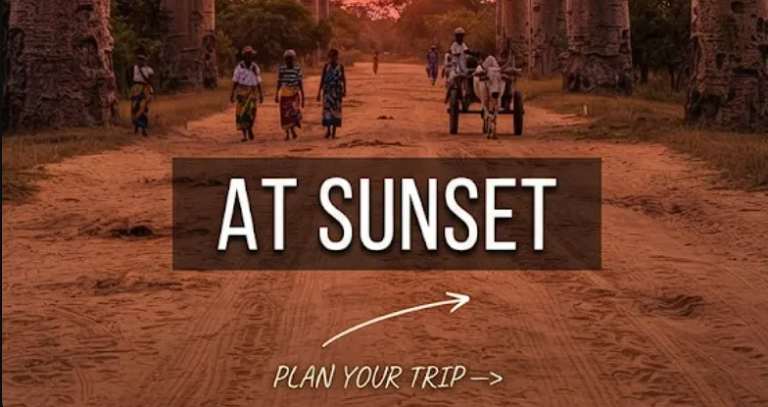
- September–October: Warm, crystal-clear skies and golden afternoon light—ideal for pairing with the Avenue of the Baobabs.
Getting There Is Half the Story
Almost every overland journey begins in coastal Morondava (accessible via domestic flight from Antananarivo or a two-day road trip). From Morondava, expect a rugged 8-to-10-hour 4×4 drive north along unpaved red-earth tracks to the park’s gateway village of Bekopaka, crossing both the Tsiribihina and Manambolo rivers on local car ferries. (Note: Ferries typically stop running around 6:00 PM.)
- Recommended Stay: Give yourself at least 3 nights in Bekopaka—one full day to arrive, two full days inside the park (Grand Tsingy + Petit Tsingy/Manambolo Gorge), and one day to return south.
- The Ultimate Western Loop: Most travelers combine Tsingy de Bemaraha with Kirindy Forest Reserve (one of the best spots to see the elusive fossa) and a sunset finale at the Avenue of the Baobabs. Adventurous travelers can even float down the Tsiribihina or Manambolo rivers by boat on the way in.
Park Fees & Guide Rules (2026–2027 Update)
- Mandatory Guides & Gear: You cannot enter alone—a certified Madagascar National Parks (MNP) guide is compulsory for every visitor, and helmets/harnesses are required on the Grand Tsingy circuits.
- Budgeting for New Park Fees: While Tsingy de Bemaraha historically charged 55,000 MGA per day (plus guide fees and a small helmet fee), MNP introduced a nationwide tariff overhaul beginning November 1, 2026, doubling daily foreign entry fees across major parks (putting top-tier/UNESCO sites in the 110,000–130,000 MGA per person, per day bracket heading into 2027). Always reconfirm exact daily rates before departure and carry plenty of Ariary cash—park offices do not take credit cards, and reliable ATMs are nonexistent in Bekopaka.
Survival Packing List for the Stone Forest
- Thick-soled, closed-toe hiking shoes with serious grip (leave flimsy trainers or sandals at your lodge).
- Sturdy gloves—compulsory on Grand Tsingy, because metal ladders bake scorching hot by late morning and bare limestone slices palms.
- 3 to 4 liters of water per person—shaded canyons trap heat and humidity, and there are no shops inside the maze.
- Headlamp for pitch-dark cave tunnels, long breathable pants to protect knees from sharp rock, and a secure strap for your phone or camera (drop something into a 40-meter fissure and it’s gone forever).
- Honest Fear-of-Heights Check: If you suffer from severe vertigo or claustrophobia, skip the high Grand Tsingy suspension bridges and opt for Petit Tsingy plus a Manambolo Gorge canoe trip instead.
The Verdict
Tsingy de Bemaraha doesn’t pamper you. Your bones will rattle on the 4×4 track, red dust will coat your bags, and your heart will hammer as you clip onto a steel cable high above a labyrinth of stone blades.
Yet the moment you pull yourself onto the summit platform and look out across an endless sea of ancient stone needles—with white sifakas watching silently from a hidden canyon canopy below—you realize you aren’t just checking off a bucket-list view. You are standing on one of Earth’s last true natural fortresses.